

What Cleaning Does A Computer Tower Need
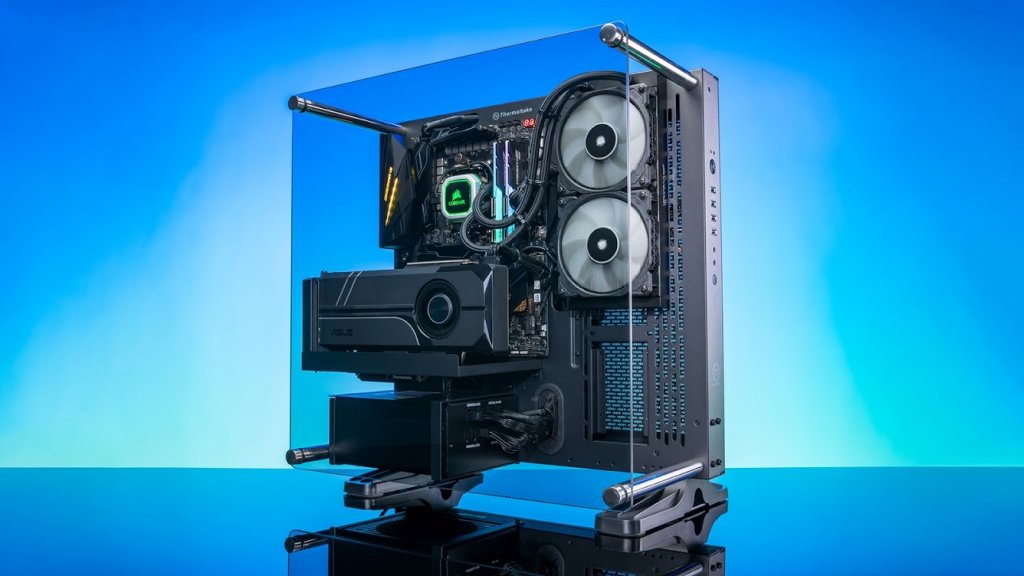
Despite its abundance of moving parts, the fact that your PC is ordinarily sitting in one location for long stretches of fourth dimension means its internal components are susceptible to dust buildup. External peripherals like keyboards and monitors can become dirty over fourth dimension every bit well, which makes routine maintenance and cleaning an essential part of PC buying.
In this guide, we'll explain the best practices and recommended tools for the properly maintaining and cleaning of both internal and external PC components. It'southward not ever necessary to give your PC a full scrub down, only taking the time to properly clean more sensitive components can go a long way in ensuring their longevity.
Essential Tools And Best Practices
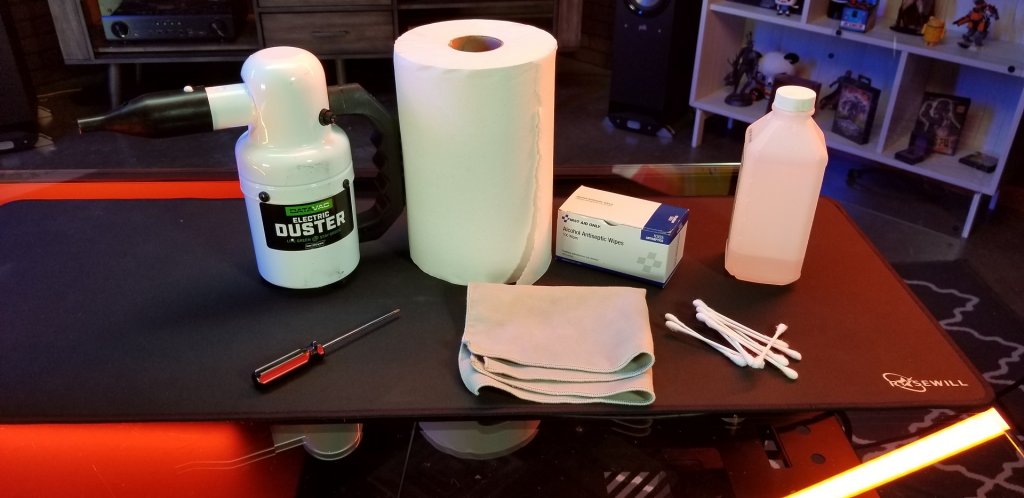
Depending on your PC's layout and your specific cleaning needs, yous don't need to accept all of the following tools. Nonetheless, the more of them you have (or are willing to go), the better.
- A screwdriver (this is really only needed for case screws or screws holding in components similar the graphics card or difficult bulldoze)
- A can of compressed air
- Cotton swabs (Q-tips preferably)
- Isopropyl alcohol (basic rubbing booze tin can work as well)
- A cleaning cloth
- Thermal paste (only needed if you want to clean and/or reseat your CPU)
One time you're set to showtime cleaning your PC, unplug it from its ability source and, only to be safe, flip the power switch off.
Cleaning External Components
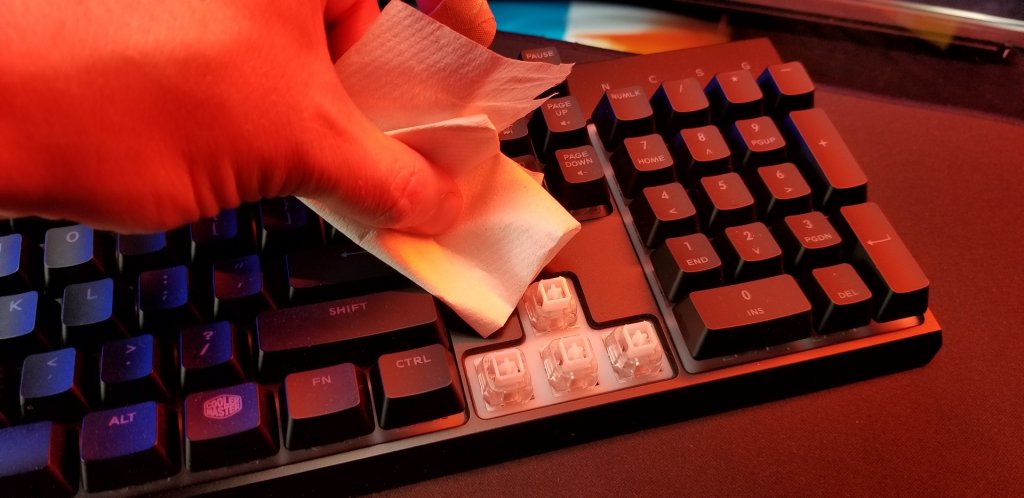
Depending on the specific component you're cleaning, you probably won't demand more than a damp cleaning fabric and maybe some Q-tips. A clammy cloth is platonic for cleaning your monitor screen and removing grit/skin flakes from your keyboard and/or mouse. If you want to actually deep-clean your keyboard, y'all can use a Q-tip to clean in-betwixt the keys.
If you're using a keyboard with removable keys, fifty-fifty better. Remove the keycaps and really get in in that location, simply make sure you don't lose any!
Cleaning Fans
For virtually any PC fan (example fans, graphics card fans, heat sink fans, etc.), a few blasts of compressed air can remove virtually loose dust. Merely brand certain that if you're cleaning a case fan, you open upwards the case and so that you can blow the dust out into the environment and non back into the computer.
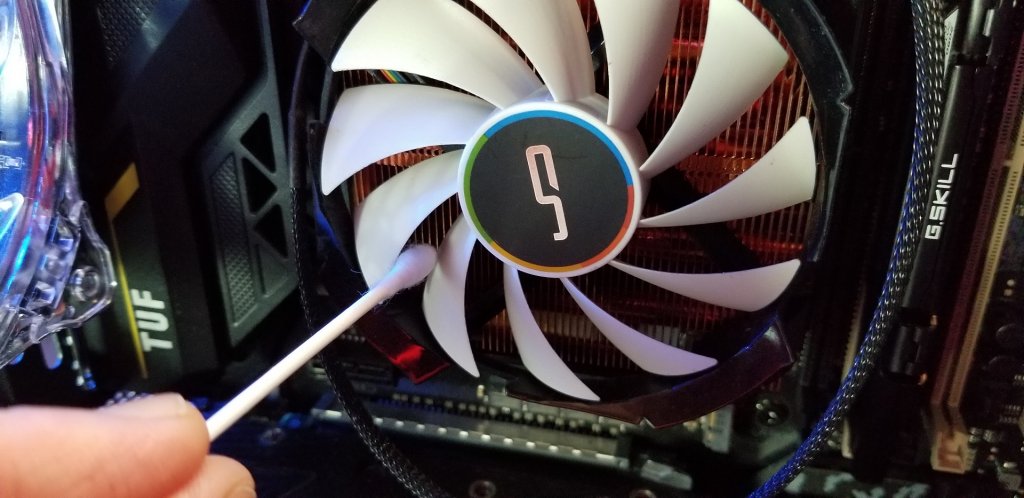
If there's caked-on dust leftover subsequently yous've finished blowing compressed air, you tin can use a Q-tip dipped in isopropyl booze to carefully wipe down each individual fan blade. If it's a case fan or rut sink fan, physically unscrewing and removing it tin help with the cleaning process, just brand sure you know how to properly put the fan dorsum once you're done.
Cleaning Internal Components
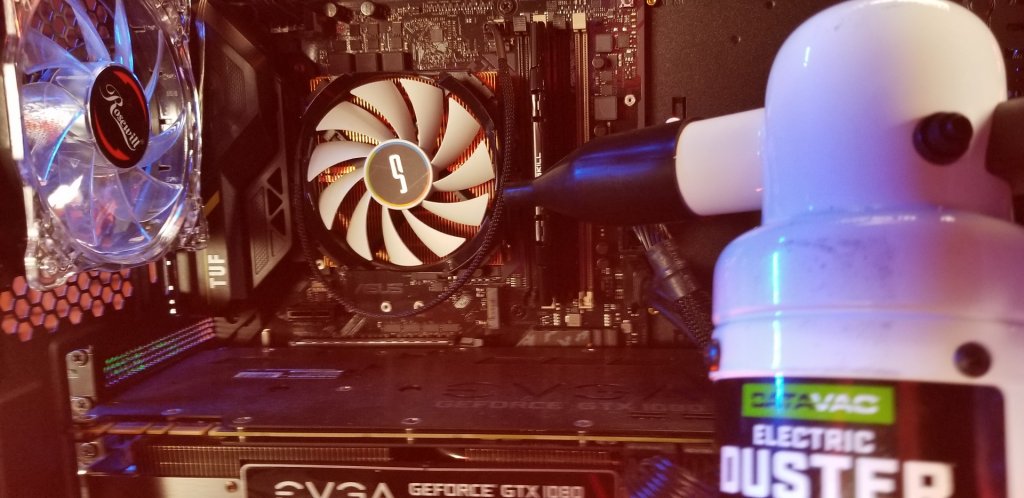
The all-time way to make clean an internal component is to disconnect information technology from the larger organization (the motherboard, power supply, etc.) and utilize the to a higher place compressed air/Q-tip tactics equally needed. Compressed air (or an air compressor if you don't want disposable) should be plenty for components similar the graphics card and difficult drive, and you can use a dry out cloth to wipe down the difficult bulldoze and power supply if you want to really exist thorough. Caked-on grit or dirt can be rubbed away with isopropyl alcohol using either a fabric or a Q-tip for hard-to-reach places.
Yous should never take autonomously the hard drive or the power supply, not even to clean them. Doing so can void their respective warranties, and potentially crusade serious harm to the component or (in the power supply's case) to yourself. If you remove components like your graphics carte, RAM, or CMOS bombardment, yous can make clean their corresponding motherboard slots with a blast or two of compressed air.
Cleaning/Reseating your CPU
The process of cleaning a CPU is a little more involved than nigh other components, just information technology can greatly benefit your PC if washed correctly. If yous notice that thermal paste is leaking over from the summit of the chip onto your motherboard, or if it has been a few years, yous should definitely consider cleaning it.
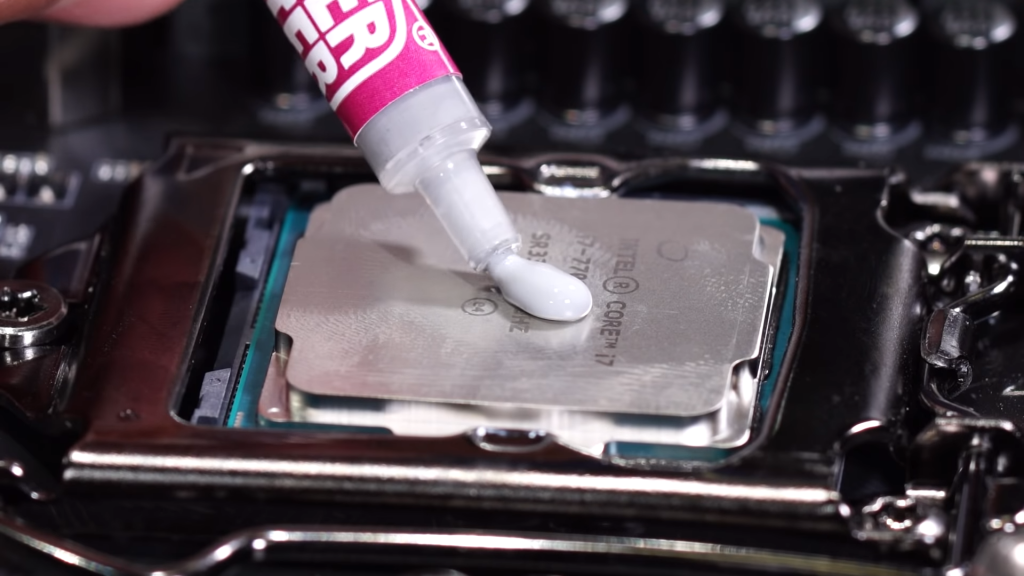
After detaching the oestrus sink, outset by removing whatsoever backlog thermal paste from the bottom of the heat sink, from the top of the CPU chip, and from around the CPU. This can exist done with isopropyl booze and either cotton swabs or a material.
Once the CPU socket and surrounding area take been properly cleaned, reinsert the CPU chip and employ some fresh thermal paste directly onto the acme center of the bit. You lot don't desire to use too much paste (otherwise it will leak and spill over), but yous also don't want to use too little (otherwise you lot risk overheating). A common recommendation is to apply enough paste to match the size of a grain of rice or a small-scale pea. Carefully supersede the heat sink so that the thermal paste evenly spreads across the lesser plate, and reinstall the oestrus sink.
As with any cleaning routine, keeping your PC spic and span can get monotonous, especially if you're the sort of person who likes to be thorough in their cleaning. Nevertheless, depending on where you keep your computer and how often you lot use it, you really don't accept to make clean it more than one time every 2-iii months.

Source: https://www.newegg.com/insider/how-to-maintain-and-clean-pc-hardware/
Posted by: comerolvery.blogspot.com
0 Response to "What Cleaning Does A Computer Tower Need"
Post a Comment